Between the constant push notifications, the endless tickets, and the rapid pace of the tech world, the Christmas break is usually my time to “force quit” the routine. This year, I’ve found a new way to spend my downtime: looking up.
While most people are focusing on the lights on the tree, I’ve been pointing my gear at the lights in the constellation Cassiopeia.
The Project: NGC 7635
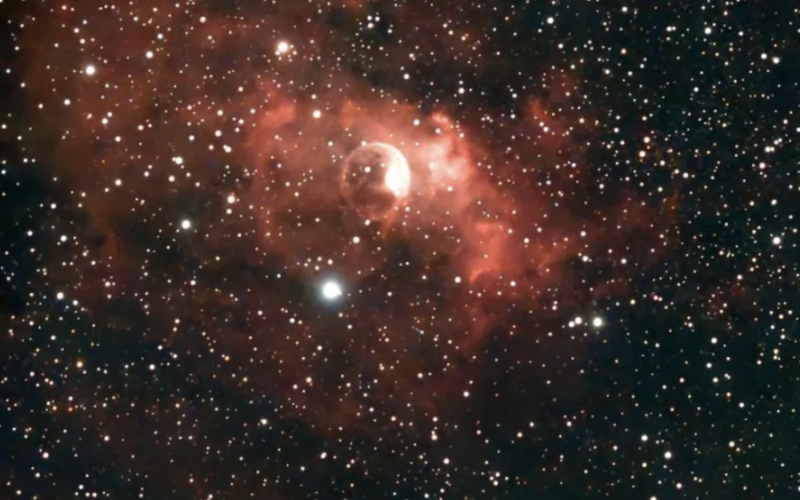
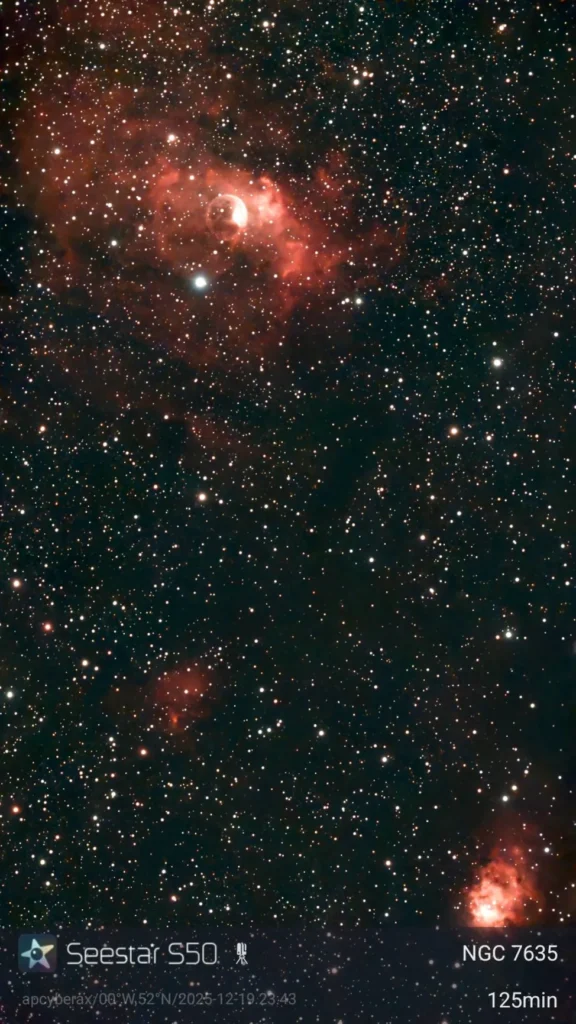
The image above is NGC 7635, famously known as the Bubble Nebula. It’s a massive emission nebula located about 7,100 light-years away.
From a technical perspective, the “bubble” is actually created by a stellar wind from a massive, hot central star (SAO 20575). The star is about 45 times the mass of our Sun, and the “wind” is hitting the colder gas of a surrounding molecular cloud, creating that perfectly formed shell.
The Setup
For the fellow gear-heads reading: this wasn’t captured with a massive observatory. I used the Seestar S50. It’s a fascinating bit of “smart” tech—essentially an all-in-one robotic telescope that handles the plate solving, tracking, and stacking internally.
- Total Integration: 125 minutes (just over 2 hours of data).
- The Experience: I set it up in the garden, went back inside to have a hot chocolate and watch a movie (Die Hard, because its not It’s Not Christmas Until Hans Gruber Falls From Nakatomi Plaza), and let the hardware do the heavy lifting in the sub-zero air.
Why It Matters
There is something incredibly therapeutic about astrophotography. In tech, we deal with microseconds and “the now.” In this hobby, I’m capturing photons that have been traveling through the vacuum of space since the Bronze Age.
It’s the ultimate “low-latency” escape. There are no bugs to fix in the Bubble Nebula—just the physics of the universe doing its thing. It’s been the perfect way to spend my Christmas downtime: staying curious, playing with some cool hardware, and remembering that the world is a whole lot bigger than a 27-inch monitor.
Wishing you all a relaxing break and a bug-free New Year!