
As a remote engineer who handles on-call rotations, the phrase “the internet is down” isn’t just an inconvenience—it’s a professional failure. When a production server hits a critical error at 3:00 AM, my connection needs to be as resilient as the systems I manage.
For many, “redundancy” is a buzzword. For my home office, it’s a requirement. Here is how I built a zero-fail environment that handles everything from local power outages to ISP meltdowns.
The Architecture of Uptime
A stable connection is only as good as the hardware pushing the packets. My setup is built on the Ubiquiti ecosystem, providing a “single pane of glass” for management and enterprise-grade reliability.
- The Core: A Dream Machine handles the heavy lifting, routing traffic across a high-speed backbone.
- The Speed: 10Gb switches ensure that internal data—whether it’s high-def CCTV footage or massive build deployments—never hits a bottleneck.
- The Wireless: Wi-Fi 7 Enterprise access points provide the lowest possible latency and highest throughput currently available, future-proofing the house for years.
Redundancy: Beyond the Copper Wire
Most people stop at a fast router. But if a technician digs in the wrong spot or a local exchange loses power, a single “fast” line is useless.
- Primary Connection: Currently a 1Gb line, soon to be upgraded to Full Fibre (FTTP) the moment it hits my neighborhood. This is the daily driver for low-latency engineering work.
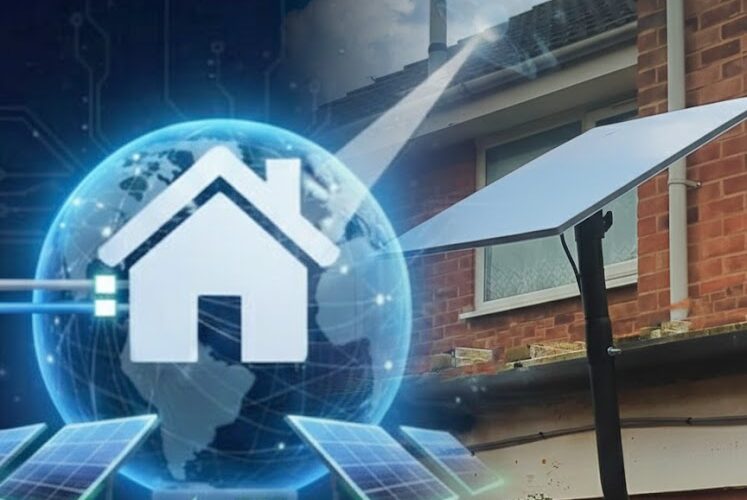
- Secondary Connection (Starlink): This is the ultimate “fail-safe.” Unlike traditional 4G/5G backups that rely on local towers (which often fail during mass power outages), Starlink communicates directly with satellites. Even if the local utility boxes go dark, my connection stays live.
Power: The Invisible Backbone
The best networking gear in the world is just a collection of expensive bricks without power. My strategy for power redundancy is two-fold:
- Server-Grade UPS units: Every switch, camera, and the Dream Machine is backed by a dedicated Uninterruptible Power Supply (UPS). This handles the “micro-cuts” and provides clean, conditioned power to sensitive electronics.
- Sigenergy Solar & Battery: The entire house is backed up by a Sigenergy system. If the grid fails, the transition is seamless. Between the solar arrays and the battery storage, my home office can function as an island indefinitely.
Why go this far?
In engineering, we talk about Five Nines (99.999%) of availability. By combining a terrestrial fiber line with a celestial satellite link, and backing it all with a multi-layered power strategy, I’ve effectively removed “the internet is out” from my vocabulary.
When you’re on-call, peace of mind is the best investment you can make.
**A Footnote on 4G: Why “Working” Isn’t the Same as “Available”**
There’s a failure mode people miss when they specify a 4G backup, and it has nothing to do with power.
Picture a regional fixed-line outage. The mobile towers are up. They’ve got power, they’ve got backhaul, everything’s green. And your backup connection is still useless, because every household in the area has just moved onto that same tower at the same moment. Fixed-line goes down, ten thousand phones stop using home Wi-Fi and start using the cell, and half of them immediately open Facebook to ask whether anyone else is off.
Mobile backhaul isn’t sized for that. It’s sized for normal load with reasonable headroom, not for an entire town’s broadband traffic arriving in the space of two minutes. And it doesn’t degrade politely, either. Everyone retries, the radio network saturates, and you sit there with full bars and nothing moving.
That’s the real problem with 4G as a fail-safe: it fails for the same reason your primary did, and it fails at exactly the moment you need it. Correlated failure is the thing redundancy is supposed to eliminate, and a backup that shares a fate with the connection it’s covering isn’t redundancy at all. It’s a second copy of the same risk.
Satellite doesn’t share that fate. A suburb full of people reaching for their phones has no bearing on my path to orbit. The link I’m relying on at three in the morning isn’t the one everyone else just piled onto.